










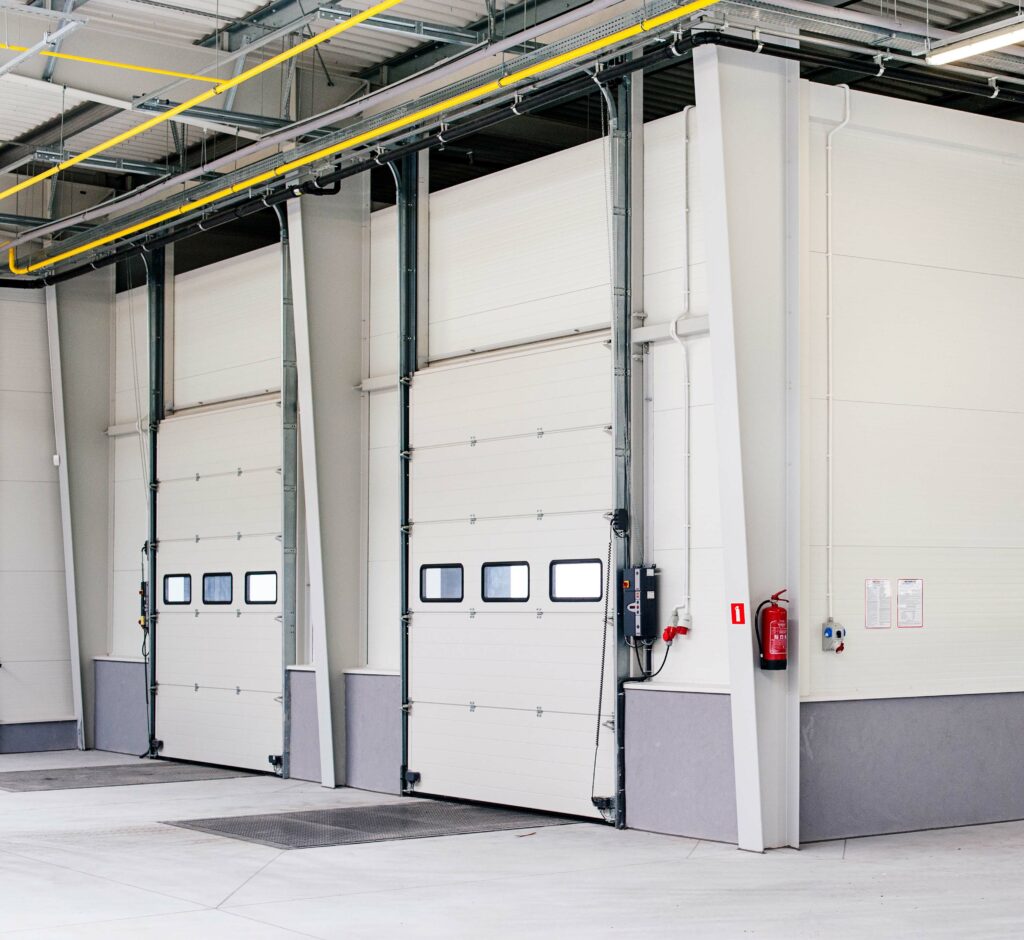
Industrial sectional doors
Industrial sectional doors
General information about sectional doors
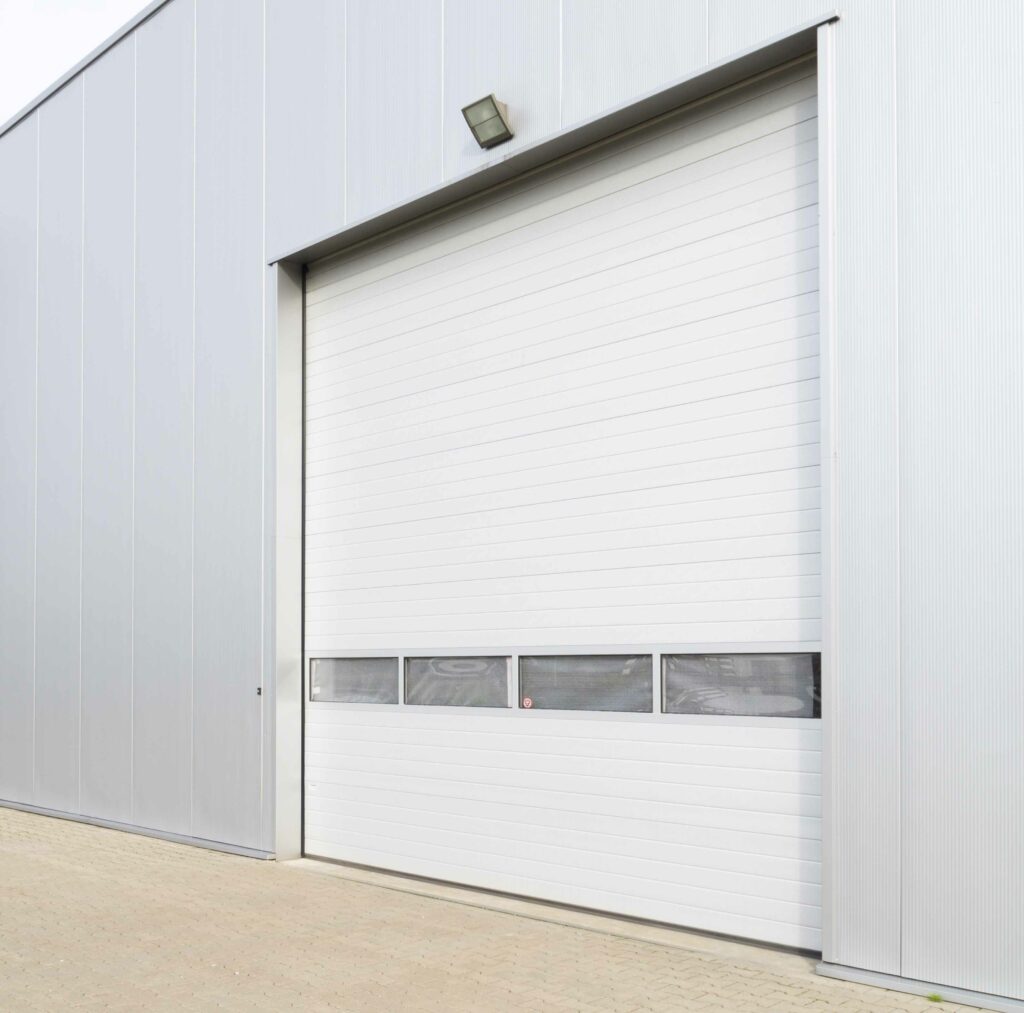
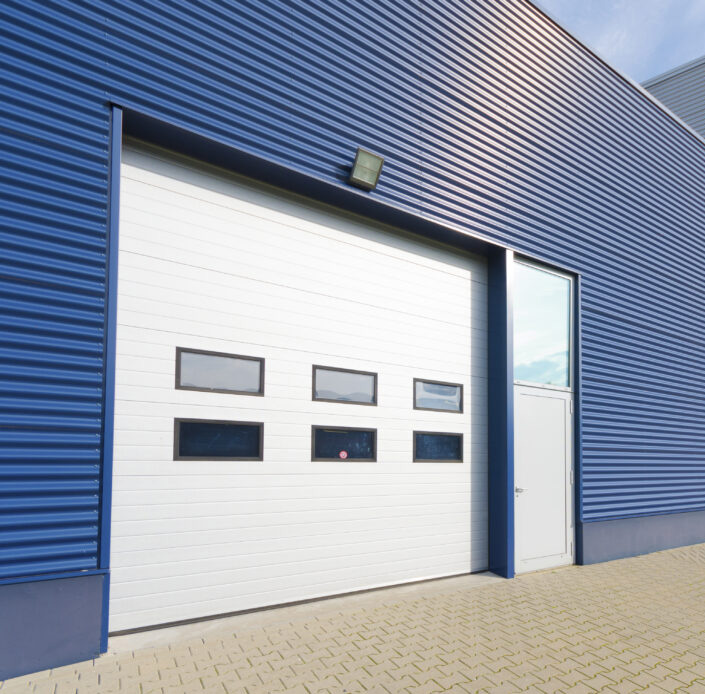
BEDITOM sectional doors are designed for installation in door openings in both industrial and commercial buildings.
Due to their excellent performance and functionality , they are ideal for all public facilities, industrial plants, collective garages, car washes, workshops, warehouses, etc.
ST40 doors are the right choice wherever high thermal insulation parameters, effective protection against wind and moisture, and stable mechanical protection of the facility are required.
The quality control system used in the production process of our doors and the use of the best materials guarantee reliable operation for many years.
TECHNICAL INFORMATION
Door casing
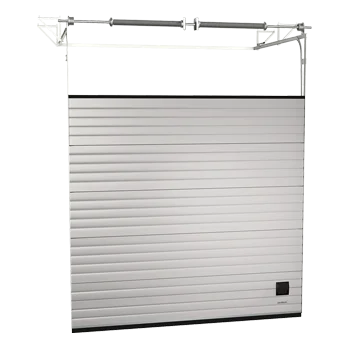
The ST40 door casing is made of steel segments (panels) with heights of 500 mm, 555 mm, 610 mm, or cut. Their quantity and individual heights depend on the ordered door height H (opening).
The standard thickness of the segments is 40 mm (other thicknesses of 60 or 80 mm are available upon request), where the core of the segment is CFC-free polyurethane foam with a density of approximately 42 kg/m³. Outside and inside galvanized steel sheets painted with polyester paints.
The standard external structure of the “woodgrain” segment sheets. It is possible to make the door casing from other panels (according to the table below). Stucco structure on the inside. The segments are coated with polyester paints in RAL colors on the outside and with white polyester paint on the inside (with the possibility of painting in a different color – optional). The bottom seal of the door, adjacent to the ground, is mounted on the lower edge of the lower segment, while the upper seal, adjacent to the lintel, is mounted on the upper edge of the last door panel.
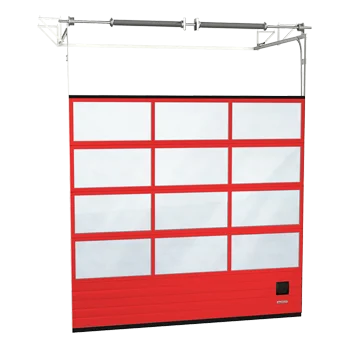
The seals are made of durable and highly flexible modified EPDM in black. The seal between the individual door segments is provided by special inter-segment seals made of flexible polyurethane foam. The side fittings of the door segments are made of galvanized steel sheet. Adjustable side and central hinges are the elements that connect the individual door segments, creating a uniform door casing. The side hinges are fitted with nylon rollers with bearings that guide the door leaf along the guides. Doors without an electric drive are equipped with a bolt and a handle as standard. For different door heights, types of guides or equipment, the external arrangement of embossments or glazing may vary. The heat transfer coefficient of the Beditom door, depending on the door size and equipment used, is from 0.8 [W/m2K].
Guide construction
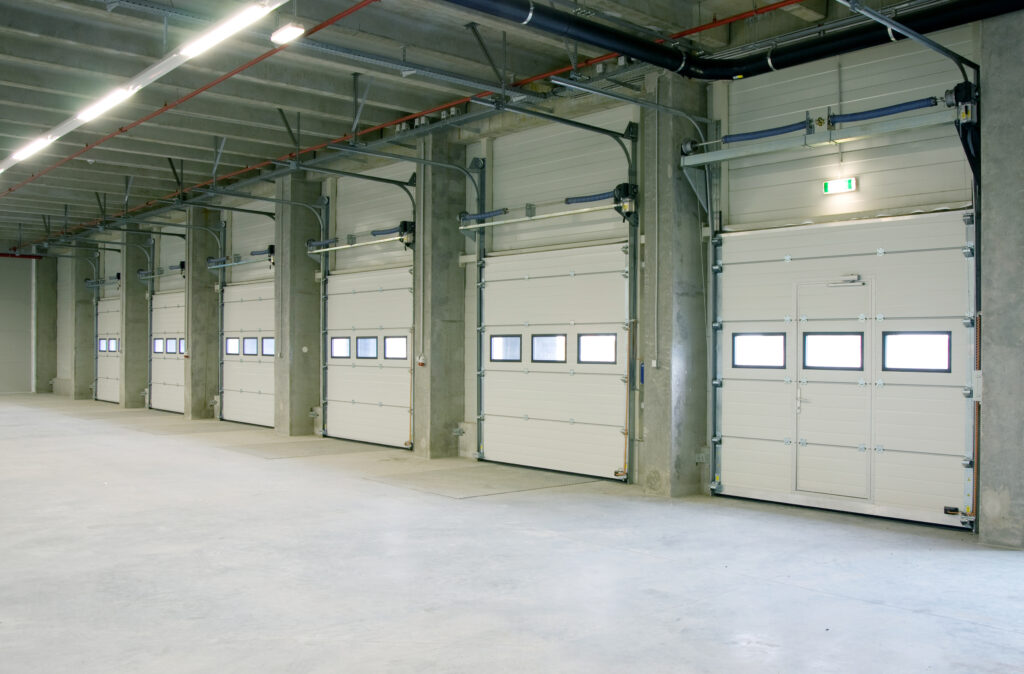
The guide structure is made of profiled steel elements that prevent the bearing-mounted nylon rollers from falling out. All guide elements are galvanized. The vertical guides are equipped with seals that adhere to the door leaf when in the closed position. The heights and lengths of individual guide elements depend on the order dimensions of the door, i.e., width B and height H, as well as on the type of guide adopted. More information on this subject can be found in the "Development Conditions" section. Horizontal guides are usually stiffened with a steel profile to enhance the stability of the structure. For various door sizes and types of guides, system suspensions, or other special solutions are used, with spacing and heights ensuring proper and safe operation. For the required number and arrangement of suspensions, see below.
Springs
The doors are equipped with a system of torsion springs enabling manual lifting (as standard) or cooperating with an electric drive (optional). The springs are designed for a minimum of 25,000 cycles (1 cycle, i.e., door opening and closing) for all door types. Standard doors are equipped with a two-spring system, but 1-4 springs are also acceptable, depending on the door size and type of guiding. The springs are typically protected against corrosion by galvanizing or powder coating. The springs are mounted on a special galvanized winding shaft installed in the lintel or at the end of the horizontal guides, depending on the type of guide used.


 Polish
  English
  German
  French
  Italian
  Czech
Czech  Swedish
  Finnish
  Norwegian